

Updated on 29. September 2026
Optimized materials management: When analogue empties management is automated – Modern IoT technology as a solution for an industry-specific challenge.
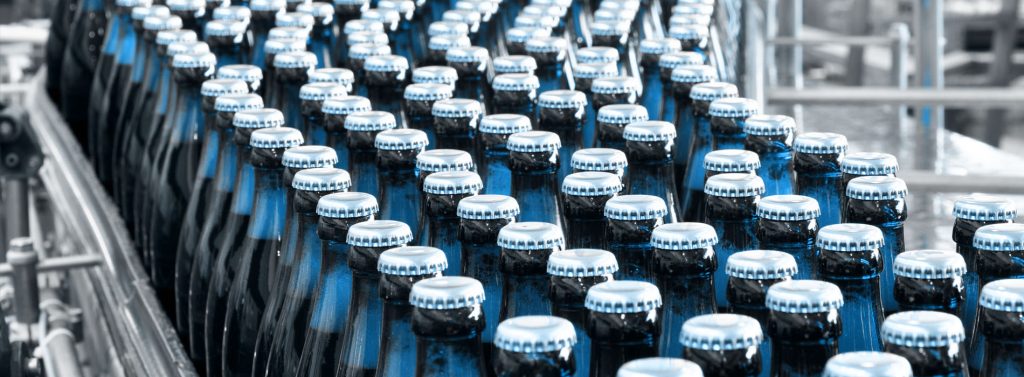
In the dynamic world of the beverage industry, flexibility, efficiency and technological innovation are essential. The empties module, an industry-specific extension of the Warehouse Execution System (WES), makes a significant contribution to the transformation of warehouse logistics in the beverage industry.
Summary:
Empties management: a key element of the beverage industry
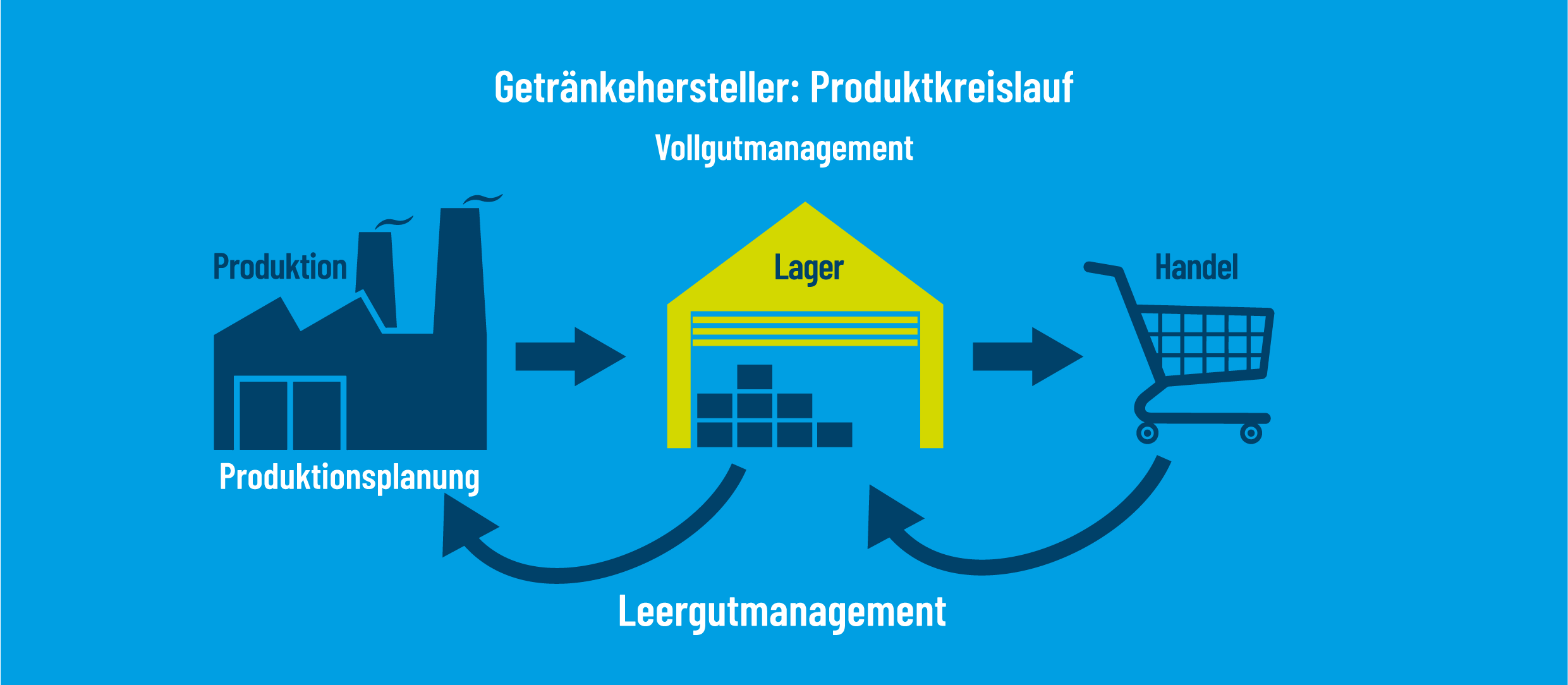
The return and refilling of empties is of central importance for breweries and beverage producers. The challenge, however, is to make this process seamless in order to optimize production planning and effectively reduce costs. Insufficient labeling and traceability of empties, complicated by different return sources such as retailers, often lead to manual, error-prone processes and loss of sales.
Why empties management is becoming more important
Reusable packaging is under growing pressure across Europe. Since August 2026, the EU Packaging and Packaging Waste Regulation (PPWR) has applied in all member states. From 2030, final distributors must offer at least 10% of beverages, including beer and soft drinks, in reusable packaging within a reuse system. For 2040, the regulation sets an indicative target of 40%. Wine, spirits and milk are excluded (ppwr-packaging.com, packaktuell, 2026).
Countries with established reuse systems show what this means in practice. In Germany, almost 80% of beer sales are in returnable packaging, and around 80% of beer bottles are pool bottles shared by all breweries (German Brewers’ Association). In February 2025, Austria raised its deposit on returnable glass bottles for the first time in 40 years, to 20 cents per bottle and €7 per crate, to speed up returns. A returnable glass bottle can be refilled up to 40 times (Bierland Österreich).
The more reusable packaging in circulation, the greater the challenge: even when empties arrive at the warehouse already sorted, they carry no unique identification. Without real-time transparency, breweries end up ordering new glass or planning filling runs that don’t match actual stock, and every lost crate or bottle is a direct cost.
Challenges in the beverage industry

Production planning:
Without precise knowledge of the available empties, it is difficult to plan production or filling efficiently. There is a risk that not enough bottles will be available, which can lead to production stoppages.

Personnel expenses:
Unclear information about the empties stock requires increased effort when searching for the required empties. Employees have to go through potentially long processes to find the empties they need, which affects productivity.
Get your free All-Day Ticket for BrauBeviale 2026 now
Manual processes, lack of warehouse transparency? identpro brings structure to your beverage logistics – with real-time tracking instead of manual scans. Secure your free ticket and visit us together with PRECOGIT and Nutreon in Hall 9, Stand 371.
Innovation in practice
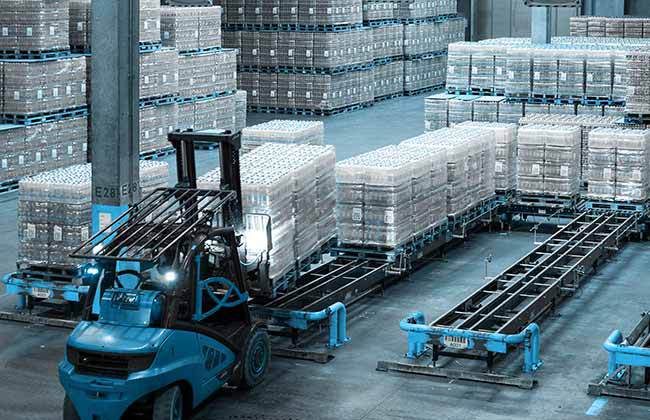
Empty pallets have no unique identification (SSCC) and cannot be easily recorded. With identpro’s Warehouse Execution System, entire inventories can be localized and controlled in real time. The solution has a unique application for the challenges of the beverage industry. To this end, the existing industrial trucks are equipped with IoT kits to record all stocks / movements / orders live. The AI-based software generates a digital twin in real time and intelligently controls driving orders.
What does SSCC stand for?
The SSCC (Serial Shipping Container Code) is an international standard code that is used to identify shipping units (such as pallets, cartons or containers) in the supply chain. It enables each shipping unit to be uniquely identified worldwide and thus facilitates tracking and administration in logistics.
Each SSCC is a unique 18-digit numeric code. This is made up of an extension digit, a GS1 company number, a consecutive serial number and a check digit. The GS1 company number is a number assigned by the GS1 system that identifies the company that created the shipping unit.
By using the SSCC, companies can track their shipping units more efficiently, automate incoming and outgoing goods and improve the accuracy of their supply chain processes. The code is usually applied to the shipping unit in the form of a barcode so that it can be easily scanned and processed in IT systems.
The empties module: Automation of empties handling
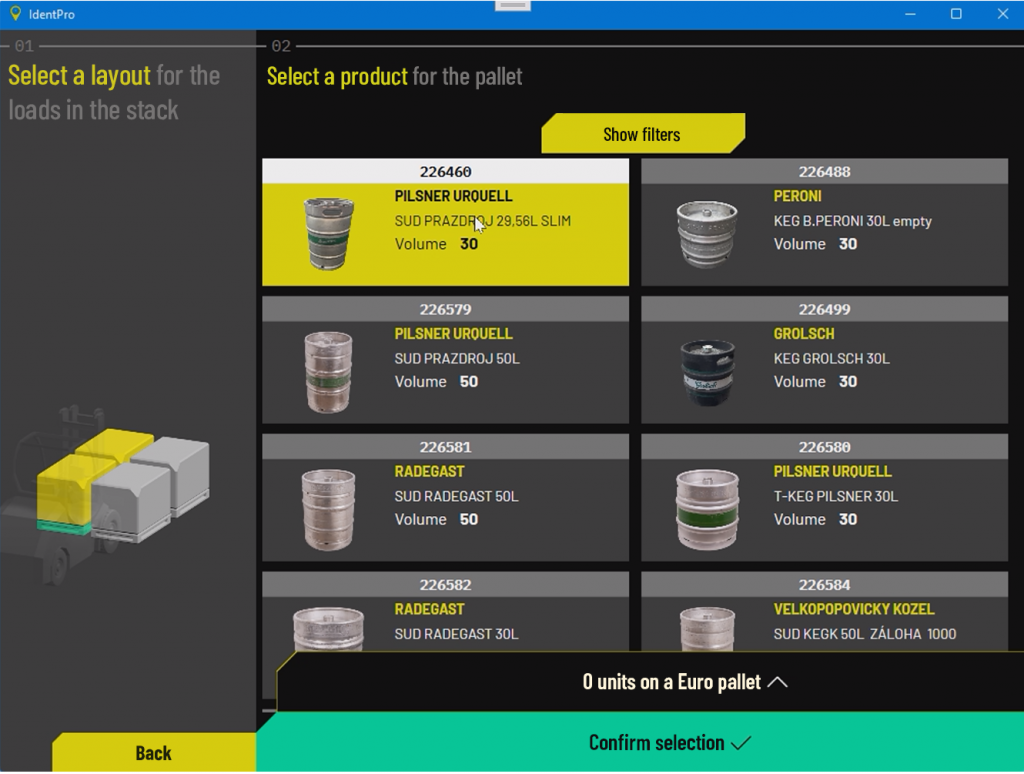
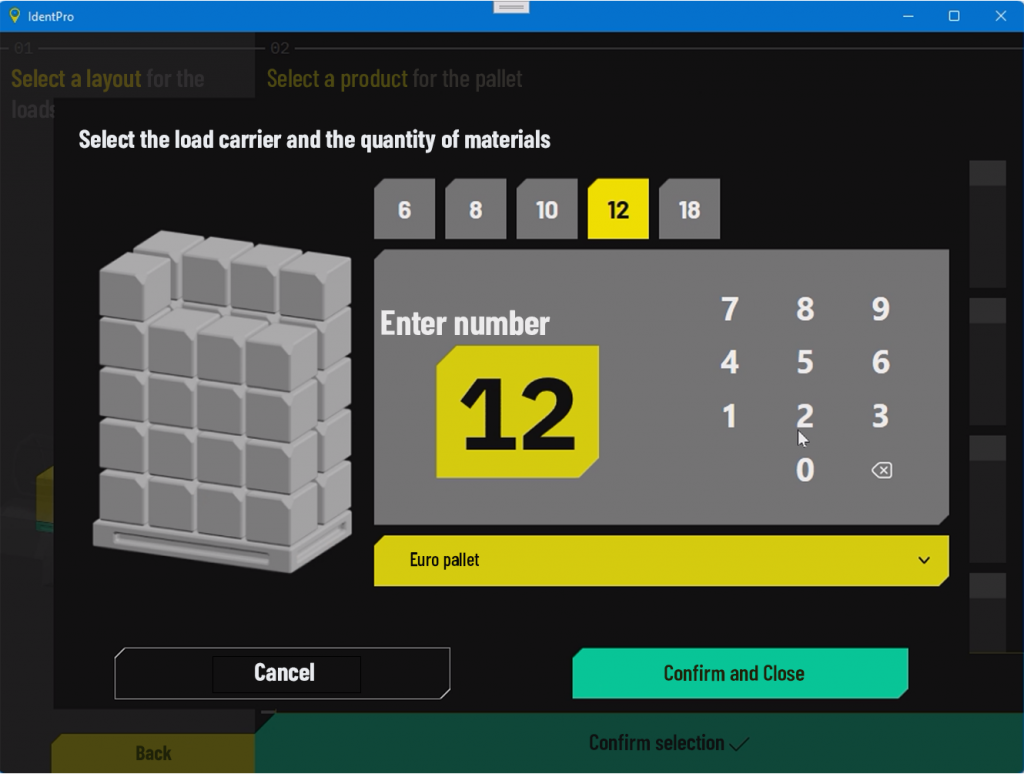
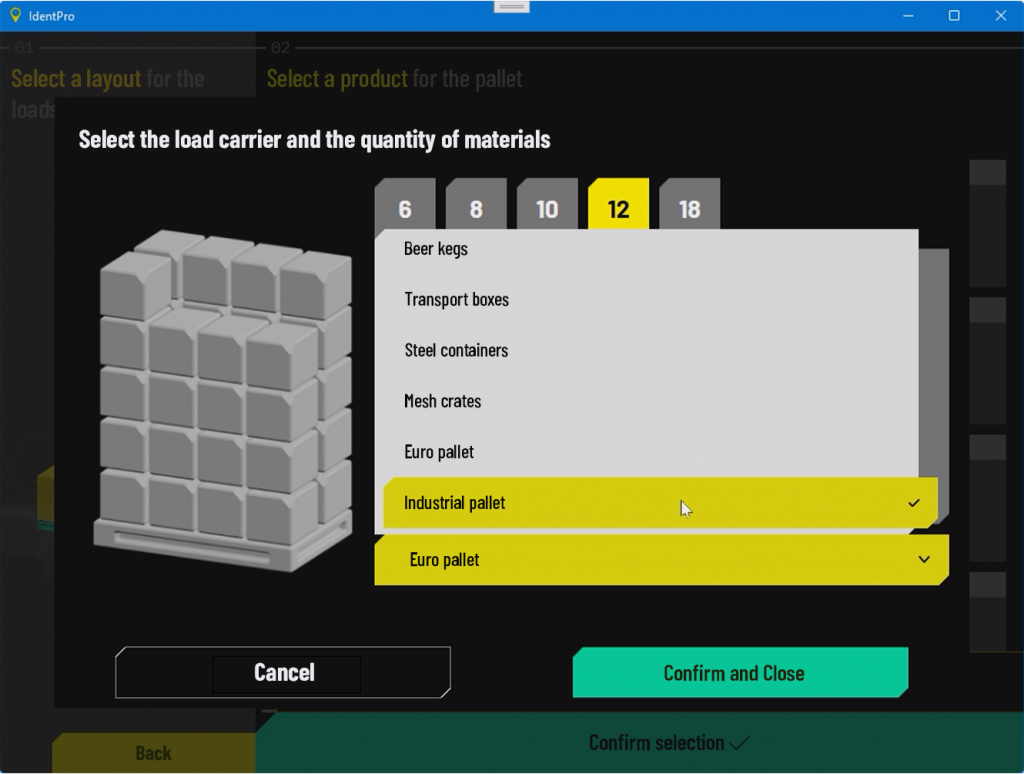
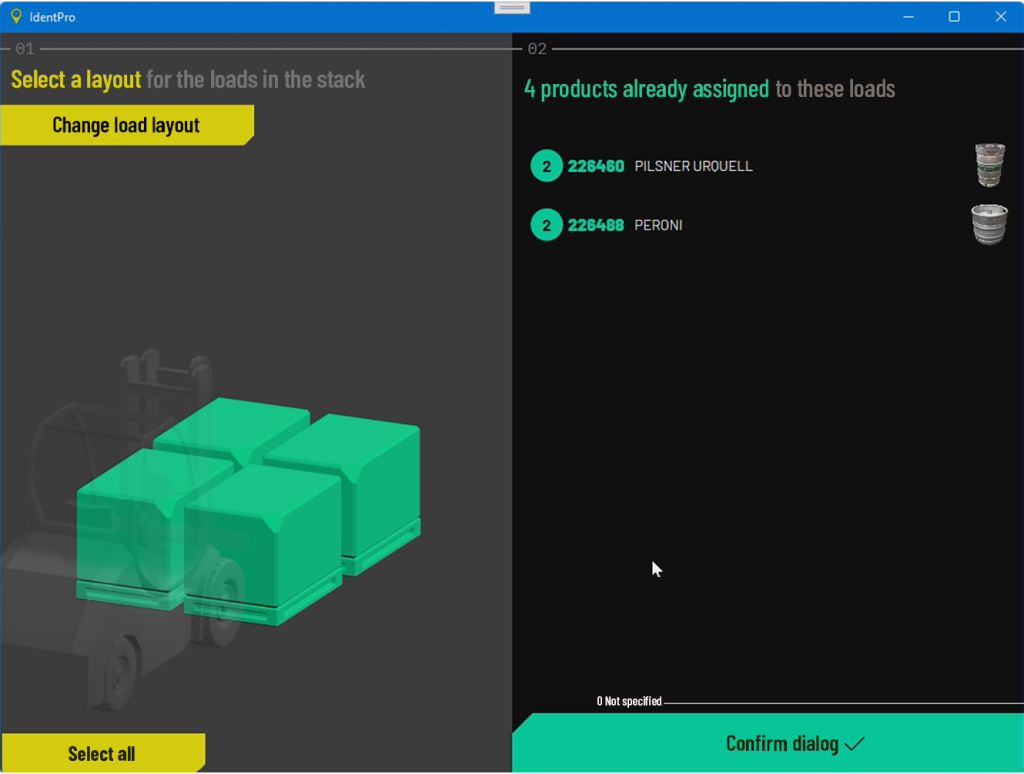
Empties – without barcodes or other identification – can now be tracked fully automatically. The forklift driver picks up an unknown pallet of empties and the stock levels are recorded via the software interface. The forklift driver uses a quick filter to pick up pallets of empties with just a few clicks. The entry window asks how many pallets have been recorded. An optional image search can then be used to easily specify the type of bottle recorded – without having to scan or leave the vehicle. The empties pallet is recorded in the software and assigned a virtual number. Once connected to the system, the goods are automatically tracked and controlled.
Advantages at a glance
- Simple recording & operation
- Drivers no longer have to search for empties
- Planning reliability in production
- Valid inventory information leads to full transparency
- Can be connected to any ERP system such as SAP EWM via an interface
How it works: Step by step
The Empties Module is designed around the day-to-day reality of beverage warehouse operations. The forklift driver never leaves the vehicle, searches for no barcodes, and enters no article numbers. The entire registration runs through a handful of interactions on the terminal interface: intuitive, fast, and error-tolerant.
Conclusion
The challenges of empties management can have a negative impact on production planning and efficiency. The introduction of automated tracking systems can help to fully exploit this potential. Efficient empties management is not only a sign of operational efficiency, but also an important factor for customer satisfaction and the economic success of a company.
International success stories in the beverage industry
Breweries and beverage producers in several European countries already use identpro’s solution, in some cases across multiple sites.
Warsteiner: recording empties in four clicks
At Warsteiner, 36 forklifts at the Warstein and Paderborn sites run on identpro’s Warehouse Execution System, with tracking areas of 280,000 m² and 70,000 m². The integration with SAP EWM provides full transparency over full and empty containers. A dedicated terminal app handles the empties: the forklift driver records an empties pallet in four clicks, without a scanner and without getting off the forklift.
Pilsner Urquell (Asahi): empty kegs and bottles in view
At Pilsner Urquell, part of the Asahi Group, the existing forklifts were equipped with IoT kits, and an automatic detection system was added at the conveyor belts of the filling station. The system tracks full and empty kegs and bottles in real time and passes the stock data directly to the ERP system. Manual scanning in the warehouse is no longer needed. Pilsner Urquell plans to roll the solution out to further Asahi Group sites.
Refresco: more performance with the same fleet
With identpro’s WES, Refresco Germany migrated from SAP WM to SAP EWM. The 35,000 m² warehouse handles around 7,000 movements per day, and its 13 forklifts now operate scan-free with 3D forklift guidance. The result: well over 25% more pallets transported with an unchanged fleet and 50% fewer empty runs. The investment paid for itself in less than 15 months.
In an era where efficiency, sustainability and digital transformation are decisive, identpro is at the forefront of this movement, demonstrating how digitalization and intelligent automation deliver tangible results in the real world of the beverage industry.
Frequently Asked Questions (FAQ) About identpro’s WES

Why Classic RFID and Barcode Systems Are Reaching Their Limits in Chemical Warehouses

Challenges for Supply Chain Management 2026

Everything at a glance: The digital twin in intralogistics

How to digitize my warehouse processes: In four steps

SAP WM® to SAP EWM® or a Fresh Start? Without Valid Warehouse Data, Nothing Works!
Real-time production planning: AI-supported control of the material flow

Guidance First: From Data Foundations to the Roof of the Automated Warehouse
Empties management in the beverage industry: real-time localization as a game changer

Real-Time Visibility in Building Materials Logistics
 Speak directly