

Updated on 24. September 2026
Digitalization has long made its way into the warehouses of manufacturing companies. Many are taking major steps toward automating their processes and are now even leveraging Artificial Intelligence (AI). Along the digital transformation journey, inconsistencies and roadblocks emerge—especially where isolated IT systems hit their limits. The root cause often lies in a fragile data foundation that cannot support automated processes. To drive automation all the way to the top of the warehouse, manufacturing companies must start with high-quality data at the core.
Summary:
Finding the Right Fit in the Vendor Jungle
Industry events like LogiMAT clearly show: companies recognize the need to automate their processes. Budgets are generally available. But the core topic in logistics today is guidance—navigating the flood of digitalization options to find the right solution tailored to a company’s specific workflow needs. At LogiMAT alone, over 1,600 exhibitors gather annually, including 250 offering warehouse management systems (WMS).
Before choosing a vendor, however, one key question must be answered: is a WMS even the right solution—or is something else required? Talking to attendees at these events, one finds a common thread: the need for skilled consultants who understand the company’s challenges and can guide them through the vendor maze. But also present are fear and hesitation: fear of choosing the wrong WMS, fear of missing the AI boat, or concerns that the economic outlook won’t justify the investment.
Start with Step One, Not Step Two
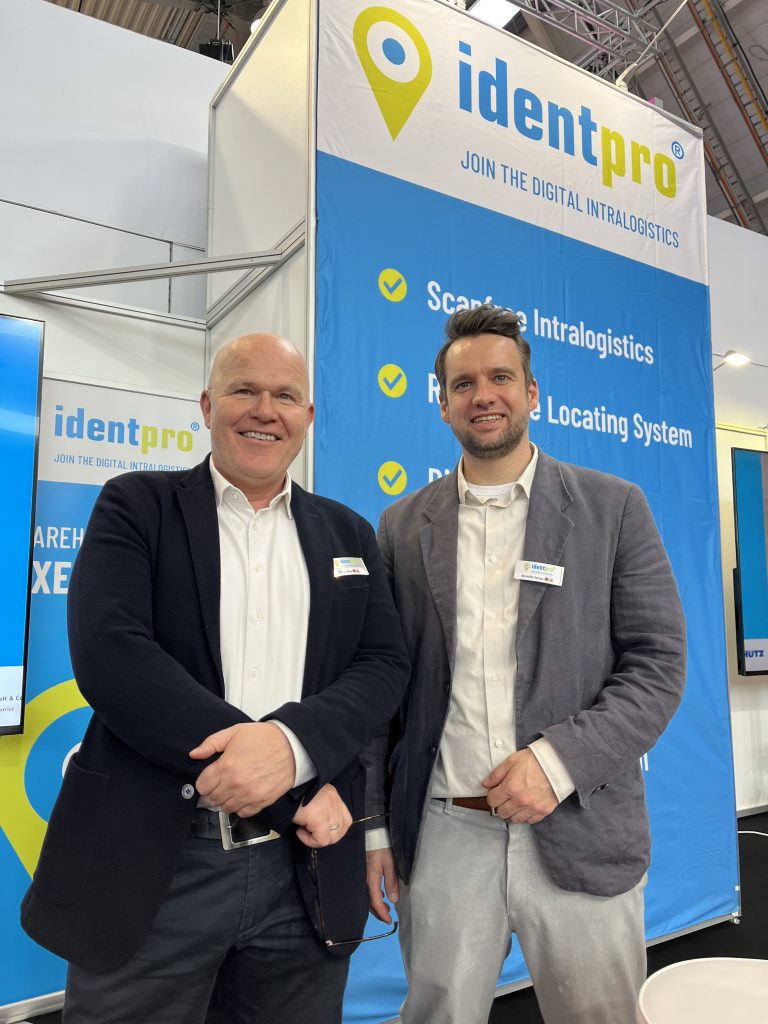
Martin Welp, Managing Director at identpro, explains: “The need is absolutely there. But faced with overwhelming choices and uncertainty, many companies choose to do nothing—and wait. That’s always the wrong move.” He recommends involving external consultants and placing a strong focus on guidance. This allows the company’s current state to be assessed, requirements to be clearly defined, and a roadmap for next steps to be created. The result might reveal that, before a WMS or AMR (Autonomous Mobile Robot) is implemented, the company first needs to optimize processes and harmonize data—or roll out an ERP, MES, EWM, or even a Digital Twin.
Everything Starts with the Right Data Strategy


At the base of every successful digital initiative lies data. Many companies install new software and are disappointed when efficiency gains don’t materialize. The reason? They jumped to step two before completing step one. Either the data wasn’t there or it was poor in quality. “Everything starts with clean, high-quality data,” says Welp. “And that’s exactly what so many companies are afraid of, because good data doesn’t just appear out of thin air.” In many warehouses, data is still captured manually—often with handheld scanners. But manual processes are prone to error, time-consuming, and hinder continuous data flow beyond departmental silos, especially when that data ends up in homemade Excel sheets that aren’t connected to a centralized IT system with real-time synchronization.
Successful digitalization requires a smart data strategy. Data is the foundation of all business activity—like the basement of a house: without a solid base, there can be no solid structure above. “Data collection should no longer be done by humans. We should let machines handle it—and process it too. In fact, many warehouses today already use scanner gates for that purpose,” says Welp. Anyone looking to adopt real-time locating systems (RTLS), automated data capture, and AI-supported processes in the future must start by building a solid foundation with high-quality data.
Intralogistics Glossary: Focus on Software Solutions
A strong connection only exists if the message is truly received. Our glossary offers a clear overview of essential intralogistics terms, with a focus on software-based solutions.
Automated Data Capture via Laser Localization
The key to efficient warehouse management is to digitally record every movement. This eliminates inventory discrepancies and inefficiencies. That’s exactly where identpro comes in: the system enables fully automated, error-free data capture through laser localization and the creation of a Digital Twin. Every item in the warehouse is tracked, and its location is always visible in the digital twin—along with key information such as weight, origin, or quality attributes. Everything that enters or is moved within the warehouse is captured. This enables the system to target and direct items to specific locations—eliminating idle runs and search trips. Based on this data, transport can be planned and executed not only with human-operated vehicles, but also with autonomous mobile robots (AMRs). These insights enable precise warehouse control, smart transport planning, and optimized S&OP (Sales and Operations Planning). With this level of integration, companies move beyond siloed data systems, avoid bottlenecks, optimize inventory levels, and gain more control over their supply chains. A crucial factor here is interoperability: it must be possible to establish relevant data streams via APIs—not just within the warehouse, but across the entire supply chain—to facilitate coordination with suppliers, customers, and sales teams.
Initiatives Driven by Business Units—IT Simply Executes
Studies show: successful companies remain successful because they invest in future-forward topics. They follow the motto: “start simple, start now.” What matters is getting started—instead of giving in to fear and standing still. Along the way, companies gain experience, learn, and acquire or build the skills they need. Digitalization is about more than software investments. It’s about guidance, orientation in a complex vendor landscape, a willingness to change, and—above all—a strong data foundation. That’s the base upon which automation can be built—right up to the warehouse roof. Companies that follow these three principles not only work more efficiently, but are also better prepared for the future. Martin Welp emphasizes that the old days are over—where a rep would come in and tell a company what it needs. “Today, the impulse must come from within—directly from the operational departments. IT simply implements it.”
Download our glossary of key intralogistics terms, with a focus on software-based solutions.
Frequently Asked Questions (FAQ) on Warehouse Digitalization and Automation
Real-time production planning: AI-supported control of the material flow
Challenges for Supply Chain Management 2026

Everything at a glance: The digital twin in intralogistics
Empties management in the beverage industry: real-time localization as a game changer

1.5 Million Reasons for Greater Transparency: How Digital Container Cycles Are Transforming Industries
What is the difference between WMS, WCS, and WES?

Fleet management 4.0: The human as conductor in the mixed warehouse

Tracking Supply Chains in Paper Manufacturing Plants with Real-Time Data
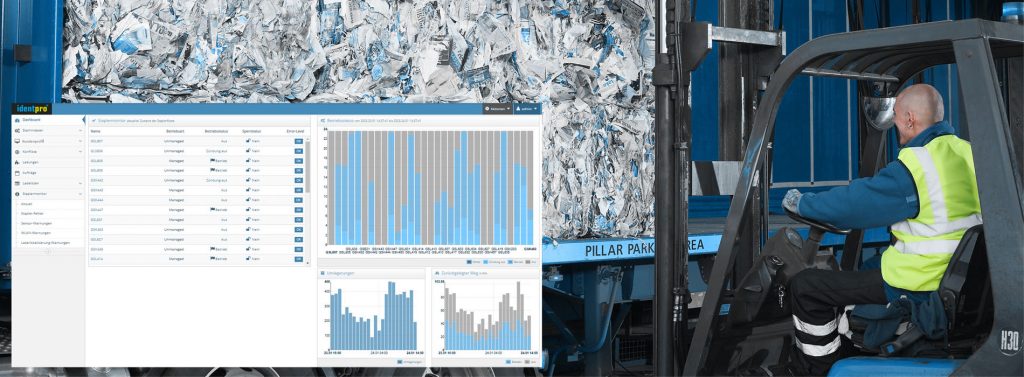
Paper & Packaging Industry: Digital Tracking of Waste Paper

 Speak directly